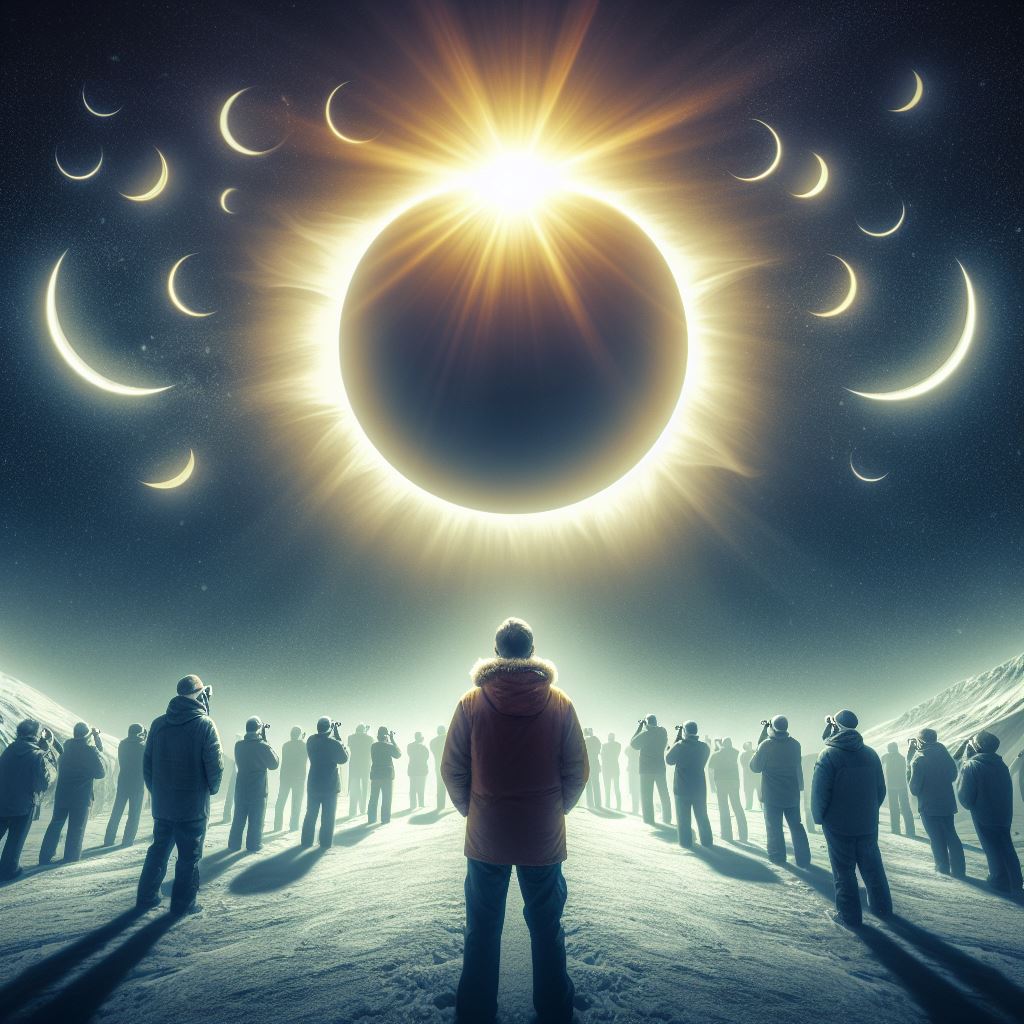
Gear up, space enthusiasts and sky watchers alike! The total solar eclipse set for April 8, 2024, is ramping up to be a celestial event you won’t want to miss. The cosmic spectacle, where the moon dances in front of the sun.
Day Turns to Twilight: The Great American Eclipse
On April 8, 2024, an extraordinary celestial event will traverse North America, transforming day into twilight. This total solar eclipse, the first since 2017, offers a unique spectacle visible from Mexico to Canada. With the next opportunity not until 2033, this eclipse is a must-see for enthusiasts and casual observers alike (Time and Date) (NASA Science).
Across the Sky: Mapping the Eclipse’s Journey
The eclipse’s path of totality, where viewers can experience the full eclipse, carves a course from Mexico’s Pacific coast through the U.S. and into Canada. This grand traverse will showcase the sun’s radiant corona, visible for up to 4 minutes and 27 seconds in locations like Torreón, Mexico (NASA Science) (American Eclipse USA).

Celestial Highlights: Venus, Jupiter, and a Comet
As daylight dims, the stage is set for Venus and Jupiter to shine alongside the shadowed sun. The appearance of Comet Pons/Brooks, or the “Devil’s Comet,” adds a rare and thrilling dimension to the eclipse, making it a celestial event packed with surprises (Astronomy).
Your Eclipse Viewing Guide: Where and How
Choosing the right spot within the path of totality is crucial for the best viewing experience. With anticipation building, identifying locations with optimal visibility, amenities, and clear skies is key. Starting your planning now will ensure a memorable and comfortable eclipse experience (Astronomy).
Viewing Safely: Protect Your Eyes
The importance of eye safety during the eclipse cannot be overstated. Special eclipse glasses are essential for protecting your eyes while observing the phases of the eclipse. These glasses should meet international safety standards, ensuring a safe viewing of this spectacular event (NASA Science).
Global Participation: How to Watch from Anywhere
No matter where you are in the world, you can join in on the excitement:
- Offering comprehensive coverage with expert commentary, NASA’s live stream is the go-to for those unable to view the eclipse in person (NASA Science).
- Time and Date: For real-time updates and interactive features, Time and Date’s live stream is a valuable resource.
- For a unique perspective, The Virtual Telescope Project will stream the eclipse through telescopes, providing detailed views of this astronomical phenomenon.
Embracing the Moment: A Cosmic Connection
The 2024 total solar eclipse presents an opportunity to connect with the universe in a profound way. Whether you’re directly in the path of totality or watching from afar, this event is a celebration of the wonders of our cosmos. Let’s look forward to this shared experience, a reminder of the beauty and mystery that surrounds us.







Leave a Reply