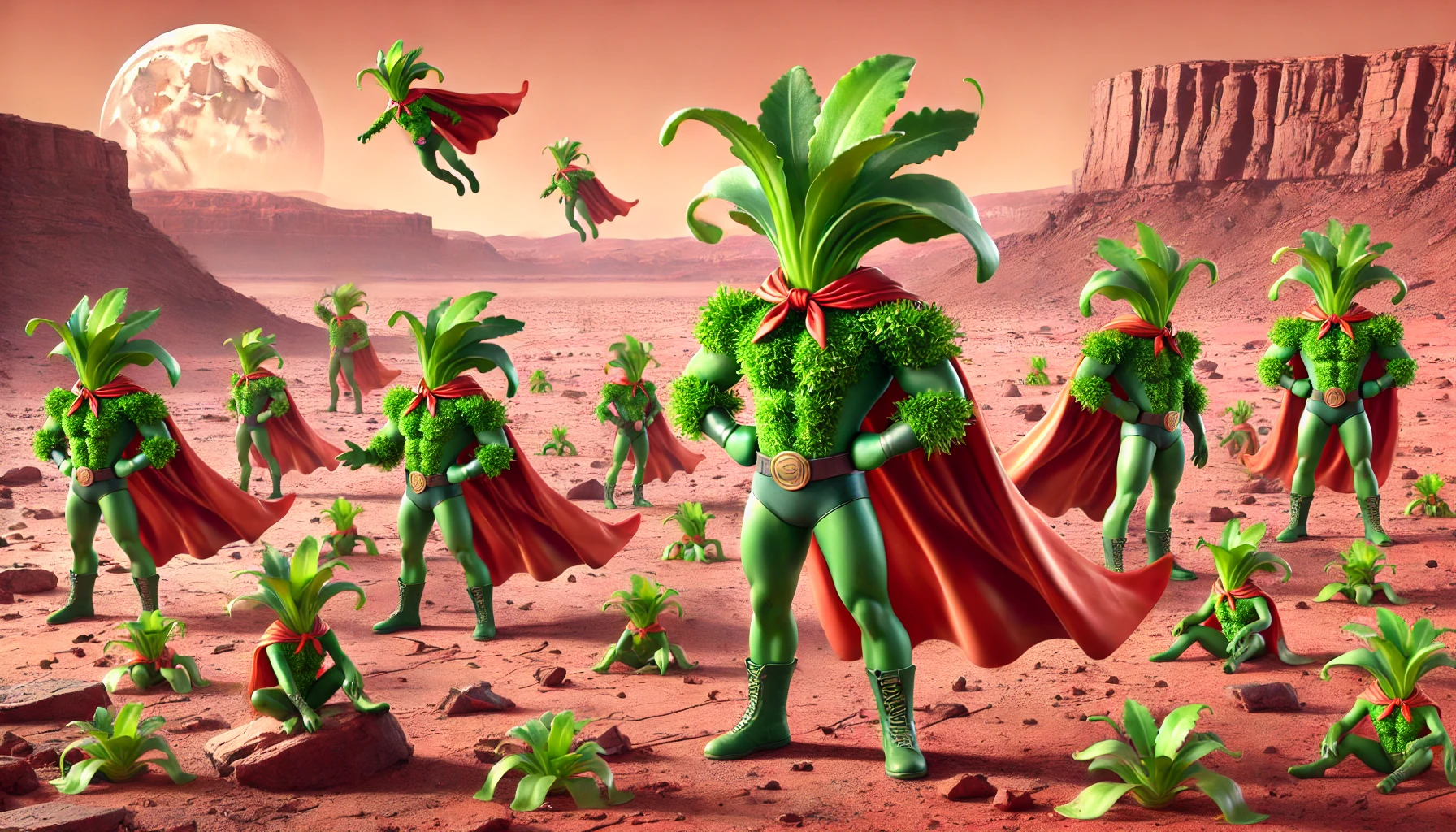
The thing that can survive gamma rays and liquid nitrogen
We may have our very own Bruce Banner in the midst, it just may not be in the human form.

Meet, Syntrichia caninervis, a frilly little desert moss that can survive conditions that would make even the hardiest of organisms, like tardigrades, whimper in defeat. This moss isn’t just tough; it’s practically invincible.
Syntrichia caninervis thrives in some of the harshest environments on Earth, from the scorching sands of the Mojave Desert to the icy realms of Antarctica. So the research scientists decided to take it for a spin to understand how it would flare in an environment like the surface of Mars. After a week of exposure to these extreme conditions, the moss not only survived but bounced back as if it had just been on a casual holiday.
Outdoing the Tardigrades:

Tardigrades—those microscopic “water bears” that can survive in the vacuum of space—were the ultimate survivalists until this flurry bush. It outperformed them in several ways. While tardigrades can endure incredible heat and radiation, our mossy hero handles even higher doses with ease. In an epic showdown of resilience, Syntrichia caninervis would leave the tardigrades in the dust.
The Research:
The researchers collected Syntrichia caninervis from the Gurbantünggüt Desert in northern China and decided to test its limits. They subjected it to near-complete air-drying, a process that would leave most plants shriveled and dead. But not this moss, atleast not at first. It sprung back to full, vibrant greenness within 20 seconds of rehydration. It come back to life in the blink of an eye.
The moss didn’t just survive; it thrived, returning to full photosynthetic capacity within two minutes of rehydration.
The researchers took things further by testing the moss’s resilience against extreme cold. After 30 days of immersion in liquid nitrogen at minus 320 degrees Fahrenheit (minus 196 degrees Celsius), the moss recovered and even grew new branches. It can also survive for at least five years at minus 112 F (minus 80 C). This moss could give the Ice Age’s toughest creatures a run for their money.
The Ultimate Hulk:

In a final test of endurance, researchers bombarded the moss with massive amounts of gamma radiation. Syntrichia caninervis shrugged off up to 4,000 gray of ionizing radiation, that is few thousand times what Bruce Banner of Marvels was exposed to. The latter was mutation, but our moss was just resilience! For context, just 4 gray is a fatal dose for humans, and even the mighty tardigrade can only handle 4,200 gray. For Syntrichia caninervis, the fatal dose is a staggering 5,000 gray.
Syntrichia caninervis isn’t just a plant; it’s a symbol of resilience and adaptability. It has evolved to survive conditions that would obliterate most life forms.
Why though?
I love asking “why” for almost everything. And a research as intense as this, we ought to know why. What could possibly this could bring? Here are few:
1. Advancements in Biotechnology:
- Drought and Radiation-Resistant Crops: The resilience of Syntrichia caninervis could help scientists develop crops that thrive in harsh conditions, ensuring food security in extreme climates.
2. Space Exploration:
- Life Support Systems for Mars Missions: This moss can survive Martian-like conditions, making it perfect for creating sustainable life support systems that produce oxygen and recycle waste on long space missions as well as has potential to terraform Mars.
3. Environmental Cleanup:
- Radiation Detox: Its ability to withstand high radiation means it could help clean up radioactive contamination, making environments safer for humans and wildlife.
4. Medical Research:
- Radiation Protection: Studying this moss might lead to new ways to protect human cells from radiation, improving treatments for cancer patients and safety for workers in high-radiation environments.
5. Climate Change Adaptation:
- Soil Stabilization and Urban Landscaping: This resilient moss could help stabilize soils in extreme weather and inspire new low-maintenance, water-efficient plants for urban green spaces.
Syntrichia caninervis isn’t just an ordinary moss—it’s a tiny powerhouse with the potential to revolutionize agriculture, space exploration, environmental science, and medicine. This unassuming plant shows us that even the smallest organisms can have a monumental impact on our world and beyond.







Leave a Reply